
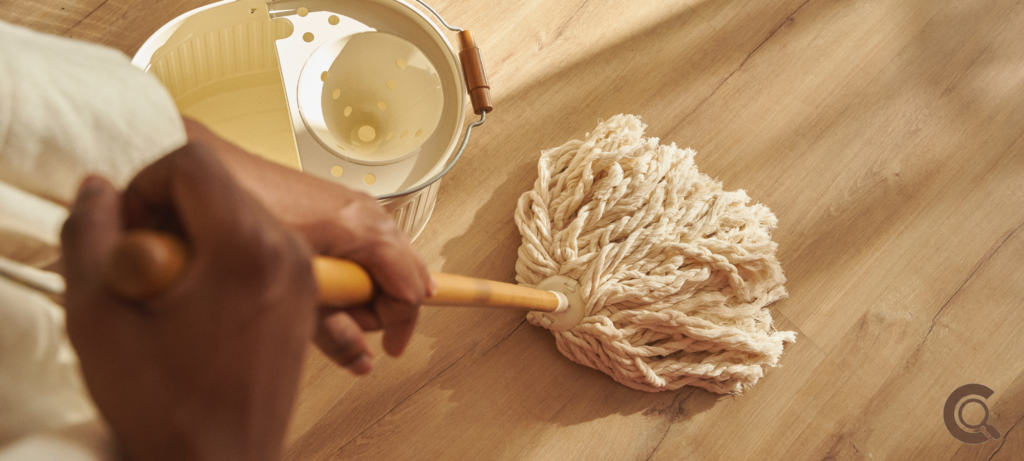
If a mop is chosen as a commodity then many households have several of them lying about. However, when choosing a mop, there are many variables to consider, the floor surface, the mop’s ability to get wet, the type of wringer and how it will be used and by whom. Getting these right can ensure that the mop lasts for years and is able to pick up dirt every time.
Start with the floor, not the mop head
The level of moisture in the solution that will be used on different floor types varies greatly. Unsealed timber, laminate, click-lock timber and some vinyl floor types require a very damp solution to be applied to the floor and the mop should almost feel cool when it comes into contact with the floor. Porcelain tile, sealed concrete and sheet vinyl require a very wet solution to be applied to the floor and benefit from being left on the floor for a dwell time to loosen the soil that has become bonded to the floor.
For textured surfaces, such as slate, riven tile and some anti-slip safety vinyls, as well as some safety floors, a flat mop is better than a round one, which will simply skim the surface of high points and miss the low points between them. String or strip mops work well on these types of floors as they can be pressed into the grooves between the slats or tiles to lift up the dirt.
Matching head type to surface and soil
- Flat microfiber pads. Best on smooth, hard, water-sensitive floors. High surface contact, low water retention, easy to launder.
- Spin or twist mops with microfiber strands. Suited to mixed flooring and larger areas. The centrifugal wringing gives fine control over residual moisture.
- Cotton string mops. High absorbency for spills and heavily soiled hard floors, but slow to dry and prone to odor if neglected.
- Sponge or roller mops. Efficient on smooth tile and useful in tight spaces, though the head degrades faster and the edges tear.
- Steam mops. Effective sanitizing on sealed tile and stone. Avoid on waxed timber, unsealed grout, and most laminates.
Judge the wringing mechanism before anything else
The wringing part of a mop is the bit that generally goes wrong and can result in your floors taking twelve hours to dry instead of two. You have two options for wringing buckets, Lever or Foot Pedal Spin. The Lever option requires two hands and usually a stable bucket. The Foot Pedal Spin option can reduce hand fatigue and allows you to vary the length of spin which in turn can act like a moisture control dial.
Testing for play and for adequate resistance in the mechanism is key. If the basket containing the mops wobbles excessively or the pedal has too little resistance when it reaches the bottom, such a short-lived cleaning aid will soon show up in the results of tests to determine the service life.
Ergonomics that reduce fatigue
Length of handle, It should allow the head of the mop to be held at approximately sternum height. Shared mops would usually be Telescopic. However, these have a point of failure and check that the locking mechanism is metal (not molded) and will not break.
Comparing the main options against real criteria
| Type | Best surfaces | Moisture control | Typical head life | Maintenance demand |
| Flat microfiber | Timber, laminate, smooth vinyl | Excellent | 200 to 500 washes | Low, machine launderable |
| Spin microfiber | Mixed hard floors | Very good, adjustable | 6 to 12 months | Moderate, rinse and air dry |
| Cotton string | Tile, concrete, textured | Fair | 3 to 6 months | High, dries slowly |
| Sponge | Smooth tile, small areas | Good | 2 to 4 months | Moderate, replace often |
| Steam | Sealed tile and stone | Fixed by design | Pads, 100 plus washes | Descaling required |
Technique determines results more than product cost
It’s also important to get as much of the dry soil off the floor before you start to mop. Vacuuming or sweeping will prevent grit being spread across surfaces and prevent the mopping head clogging after a few square meters. Mop in S-shaped paths, trying to work back to an exit point. Turn and then either rinse the mopping head or change it over every 8-10m². If you want that rinse and wring step to take seconds rather than minutes, an easy-wring spin mop with a pedal-driven basket is well worth keeping in the cupboard.
The second aspect to understanding floor cleaning is the use of cleaning chemicals. We find that there is an attitude towards cleaning using too much neutral detergent, in some cases leaving a sticky film on surfaces and other products which leave floors looking dull within days. Measure not pour and always rinse surfaces back with clean water when using alkaline based cleaning solutions on sealed surfaces.
A short maintenance routine that protects the investment
- Rinse the head under running water immediately after use until the water runs clear.
- Spin or wring to the lowest practical moisture, then hang the head downward in open air.
- Launder microfiber separately, without fabric softener, which blocks the fibers.
- Empty, scrub, and dry the bucket rather than storing standing water.
- Inspect the spin basket, pedal, and collar monthly, and replace heads at visible matting.
For covering mixed hard flooring, a simple easy-wring spin mop with replaceable microfiber heads and a 2-chamber bucket is the best choice. For cleaning water sensitive wood flooring, use with a flat pad cleaning system.