
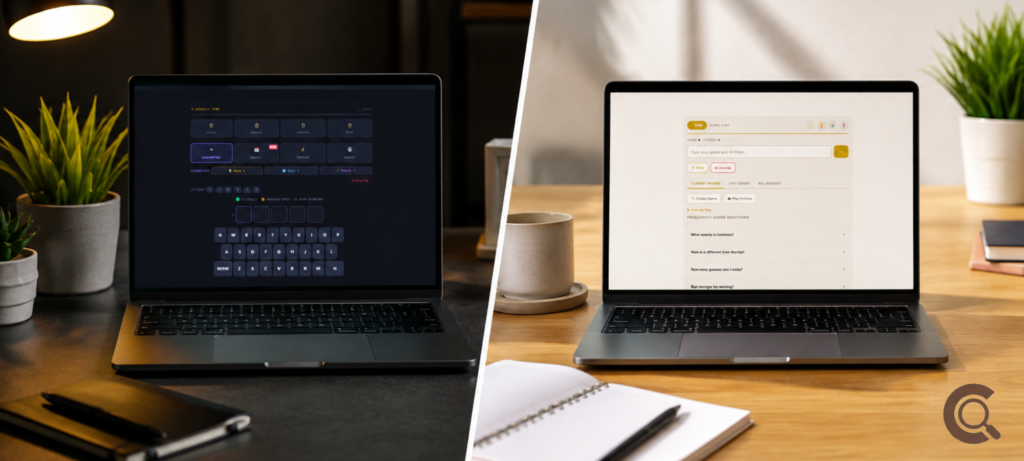
Letroso vs Contexto is a comparison that’s come up more lately, mostly because daily word puzzles have quietly become one of the most addictive corners of the internet. Both give you one puzzle a day and ask you to solve it using logic rather than luck, but the way each one gets you there is genuinely different. If you’ve played one and are wondering whether the other is worth your five minutes tomorrow morning, here’s an honest breakdown.
Letroso vs Contexto: Quick Comparison
| Feature | Letroso | Contexto |
|---|---|---|
| Word length | Variable, 3–8 letters | Any length (semantic, not letter-based) |
| Guess limit | Unlimited | Unlimited |
| Feedback type | Color + connection lines | Numeric rank |
| Difficulty style | Logic and pattern-based | Meaning and association-based |
| Extra modes | Speed mode, hard mode, power-ups | None (base version) |
| Best for | Puzzle lovers who like variety | Vocabulary and association thinkers |
What Makes Each Game Different
Contexto works entirely on meaning rather than letters. Every guess gets ranked by how semantically close it is to the hidden word, with no fixed word length and no letter feedback at all. That makes it a different kind of thinking exercise — one that rewards people who can think in categories and associations rather than spelling patterns.
Letroso takes a more traditional letter-guessing approach but adds its own twist. The word length changes daily, anywhere from 3 to 8 letters, and connection lines appear between tiles showing which letters sit directly next to each other in the final word. Combined with unlimited guesses and extra modes like speed and hard mode, it feels like a more layered version of the classic letter-guessing format.
Power-Ups, Scoring, and Extra Modes
This is where the two games really part ways. Contexto keeps things minimal in its base version — no hints, no power-ups, just your guesses and the rank they return. That bare-bones approach is part of the appeal for players who like a puzzle stripped down to its purest form, with nothing to lean on but their own reasoning.
Letroso goes the opposite direction. It gives you Hint, Elim, and Bomb power-ups to use when you’re genuinely stuck, plus a scoring system tied to how few guesses you needed. On top of the daily puzzle, it also offers unlimited practice rounds, a speed mode for players who want a timer-driven challenge, and a hard mode for those who’ve already mastered the standard difficulty. If you like a game with more knobs to turn and more ways to challenge yourself beyond just “solve today’s word,” Letroso gives you noticeably more to work with here.
Which Game Is Harder?
This depends on what kind of difficulty you enjoy. Contexto’s challenge comes from not knowing where to even start — you’re guessing blind in a huge semantic space with only a rank number to guide you. Letroso’s challenge comes from juggling more information at once: variable word length, connection clues, and letter positions all together.
If you like puzzles where the challenge is “I have no idea what direction to guess in,” Contexto wins that one. If you prefer puzzles with plenty of clues to work with, but need to piece them together carefully, Letroso is the tougher, more layered experience.
Daily Streaks and Replay Value
Both games reset once a day and build in some kind of streak or scoring system to keep you coming back. Contexto tends to take longer to solve, sometimes considerably longer, since semantic guessing doesn’t give you the same fast feedback loop that letters do. Letroso’s speed mode and hard mode add a bit more replay value within a single day, since you can revisit the format even after solving the daily puzzle once.
If you’ve been curious about how Contexto’s ranking system compares to a more traditional letter-based game, our guide on Contexto vs Wordle covers that from a different angle. And if opening-guess strategy interests you more, Best Starting Words for Contexto covers proven openers that give you useful information early on.
Which Game Should You Actually Play?
- If you enjoy thinking in categories and meaning rather than letters: Contexto is the better fit, and it rewards a wider vocabulary.
- If you want more variety day to day, with extra modes and a puzzle that changes shape constantly: Letroso gives you more to work with, especially if you like optional challenge modes.
There’s no rule saying you have to pick just one, either. A lot of daily-puzzle regulars rotate between the two depending on how much time they have and what kind of thinking they’re in the mood for that morning.
Frequently Asked Questions
Is Letroso similar to Contexto?
Not really, beyond both being daily word puzzles. Letroso uses letter guessing with variable word length and connection-line clues, while Contexto uses semantic ranking with no letters or fixed length at all. They test very different skills.
Is Contexto harder than Letroso?
It depends on the player. Contexto’s difficulty comes from semantic guessing with limited direct feedback, while Letroso’s difficulty comes from juggling variable word length, connection clues, and letter positions at once. Both have a real learning curve.
Which game is best for beginners, Letroso or Contexto?
Letroso tends to feel more approachable at first since it keeps a familiar letter-guessing format. Contexto has a steeper learning curve because semantic ranking takes longer to build intuition around.
Do Letroso and Contexto reset daily?
Yes. Both games release a new puzzle once a day, typically resetting at midnight, and each tracks some form of streak or score to encourage daily play.
Can I play both games for free?
Yes. Letroso and Contexto are both free to play in a browser with no account or download required.
Final Thought
Letroso vs Contexto really comes down to what kind of daily puzzle mood you’re in. Contexto asks you to think in meaning rather than letters, rewarding a wide vocabulary and strong association skills. Letroso keeps things closer to a traditional letter-guessing format but adds variable word lengths and extra clue types for a puzzle that changes shape every day. Neither is objectively the “best” — they’re built for slightly different kinds of puzzle brains, and trying both for a week is the fastest way to find out which one fits yours.