
Most of the failures with interlock cases occur at the stage of scheduling the appointment to install the interlock device and not at the stage of the actual installation of the device. Therefore, when you are advising a client as to how to comply with a restricted license or you are attempting to manage a large volume of compliance cases, the vast majority of problems arise prior to the appointment for the interlock.
What follows will outline the processes needed to prepare for an appointment, how selecting a provider affects the client for the 6-12 months after installation, and what their obligations are once the device is powered and they begin taking estimates of their breath samples.
Confirm the Order and the Driving Record Agree Before Anyone Calls a Provider
When a restricted license is allowed by a court, a Motor Vehicle Record must reflect the restriction(s) authorized by the court. The interlock provider installs the device against the administrative record, not the signed paper of the judge. Therefore, until the restriction(s) have posted to the MV record, installation of an interlock on a client’s vehicle will result in a device being installed on a vehicle that the client is not yet legally authorized to drive and the start of the restriction period may not occur when expected.
Before booking, verify four items.
- The exact start date of the restriction period and whether any license suspension must run first
- The length of the term, including any enhancement for refusal, elevated BAC, or a prior offense
- Whether the order specifies a particular device class, camera requirement, or GPS feature
- Whether the program requires enrollment with a supervising agency, probation office, or alcohol safety program before installation
Vehicle eligibility is a separate check
1. Be the registered owner of the vehicle, or have the written consent of the owner. Installation on a Hybrid, Electric or Fleet vehicle may require special wiring in addition to the normal installation time. Vehicles owned by the client’s employer may be excluded from interlock requirements with the approval of the employer. However, such a vehicle would not normally be included in the client’s driving and the client would require the employer’s consent to installation of an interlock on company owned vehicles which they also use personally.
Choosing among approved providers on criteria that matter later
Differences in the service network and the requirements for the calibration of the device that is installed can have a larger effect on the client than the monthly rate of the device. Typically, a vendor’s scheduling for the required calibration(s) can affect a client’s compliance with terms and conditions of the Interlock Program more so than the monthly rate that the vendor is charging. A client who has to travel 90 minutes for a single required calibration will on occasion miss a required test and a single missed test will cause a violation to be reported against the client.
Weigh the following when comparing certified vendors.
| Factor | Why it matters | What to ask |
| Service center density | Calibration visits recur every 30 to 60 days for the full term | How many locations within a 30 minute drive of home or work |
| Lockout response | A permanent lockout immobilizes the vehicle until serviced | Is there after-hours phone support and an emergency code procedure |
| Reporting cadence | Determines how fast an agency sees an event | How quickly violations are transmitted and whether the client is notified |
| Fee structure | Total cost is installation plus monthly plus removal plus incidentals | Are lockout resets, missed appointments, and relocations billed separately |
| Removal process | Early or improper removal can restart the term | What written authorization is required before de-installation |
Indigency and fee relief
Some providers (such as interlock restricted license providers) also offer reduced-fee services for people who fall into financially restricted groups of people. These services are often applied for by the supervising agency or other third party and approved prior to installation of the interlock device.
What happens at the appointment itself
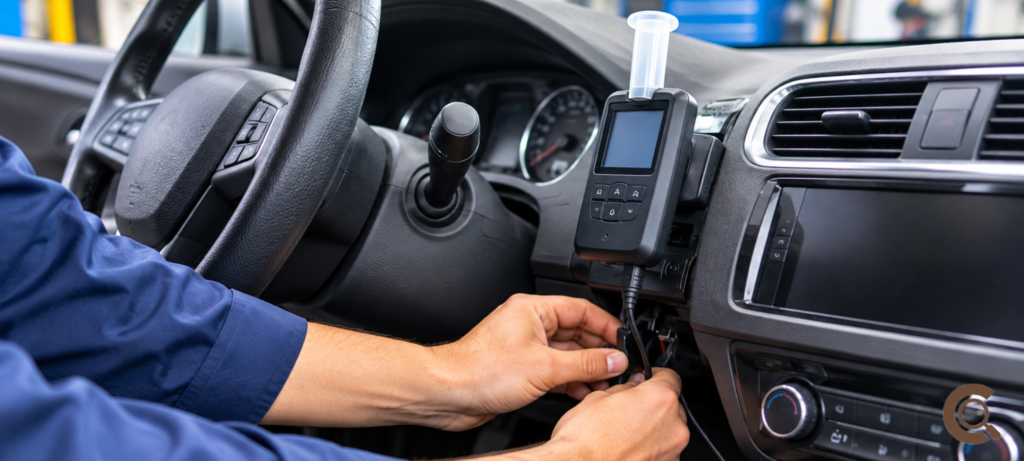
In most instances, interlock installation will take 1-3 hours to complete for a single device and the driver will receive training on the interlock and how to provide proper breath samples. Drivers in northern Virginia are usually best served by booking with a shop that handles ignition interlock Alexandria VA appointments regularly, since a nearby service center keeps later calibration visits manageable. Most providers will require registration for the vehicle to be installed, proof of insurance, driver’s license, court order and DMV approval paperwork as well as payment for services. It is best to call ahead to confirm what documents will be required for service at a particular location as some offices may require additional documents.
The training covers a lot of information on how to properly take a breath sample, as well as how the device will behave in the event of a missed or failed test. Many of the first-month violations are due to technique errors as well as clients pulling over to shut off the engine during a rolling retest prompt which will record as a refusal.
Obligations that begin on day one
The reporting process begins the moment an interlock device is activated. All attempts, including lockouts, tamper alerts, and service visits, are recorded by the device and sent to the appropriate monitoring authority.
- Attend every calibration on schedule, and reschedule in advance if travel interferes
- Avoid mouthwash, certain medications, and fermented foods immediately before testing, since residual alcohol can register
- Report any mechanical work, battery disconnection, or accident to the provider, in advance where possible
- Keep copies of every service receipt and compliance report for the full term
- Obtain written authorization before removal, and confirm the restriction has been lifted on the driving record afterward
Confirm requirements against official sources
Another item to verify is program information. Because each state, and often even within the same state for different courts, has its own Interlock Program with varying rules and requirements (such as lockout time frames and terms for extending a period of restriction), check with the court, DMV and/or program administrator as needed and verify information in writing prior to the appointment to verify accurate information.