
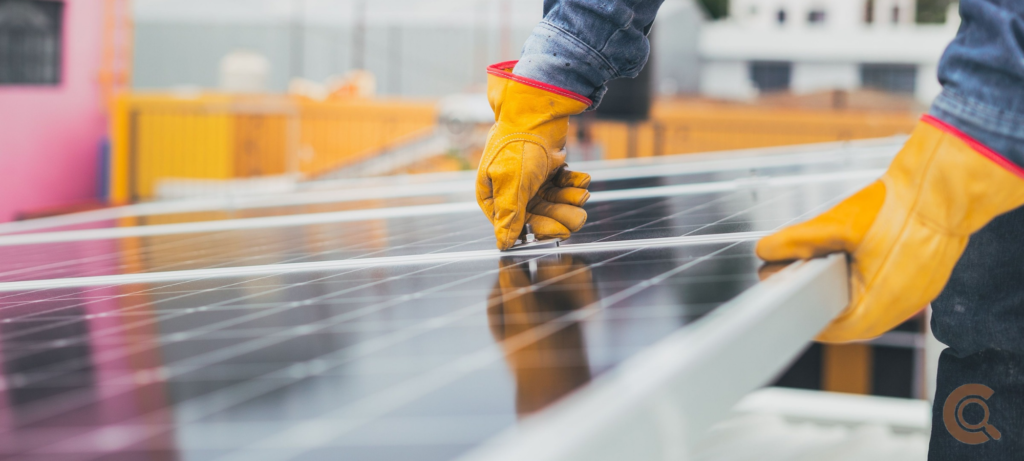
Choosing solar panels is often presented as a matter of comparing panel prices and deciding how many modules will fit on the roof. In practice, the panel itself is only one part of the installation. The roof, electricity demand, inverter, export arrangements, wiring, battery options, and even the condition of the existing consumer unit can affect how well the finished system works.
A good decision starts before the quotation arrives. You need to understand what the installer is actually assessing, what the proposed system is expected to generate and which parts of the design could affect the final cost.
What Should A Solar Panel Installation Service Check Before Quoting?
A proper solar panel installation service should assess the property rather than produce a system size from a standard household template. The survey should look at roof orientation, pitch, available roof area, shading, roof condition and the practical route for cables and other equipment.
The electricity side of the property also deserves attention. Your annual electricity consumption gives an installer a starting point, but the timing of that consumption matters too. A household that uses most of its electricity during daylight hours can use more solar generation directly than one that is empty during the day.
The survey should also consider the fuse board, meter arrangement, and where the inverter will be installed. These details can affect both the design and the amount of electrical work required. A quotation produced without a meaningful property assessment is therefore difficult to compare with one based on a detailed survey. Current consumer guidance also recommends checking roof structure, shading, electricity use, metering and equipment locations during the survey.
Your Electricity Usage Matters More Than The Number Of Panels
A larger array is not automatically a better investment. The useful question is how much electricity the property can consume directly and how much generation is likely to be exported.
Look at your electricity bills over the previous year and note any changes that are likely to increase consumption. An electric vehicle, heat pump, home office or future switch from gas cooking to electric appliances can alter the household’s demand significantly.
Daily usage patterns are also worth discussing. If most electricity is consumed in the evening, solar generation from midday may not line up particularly well with demand. A battery may help shift some of that electricity into later hours, but it adds another cost and another component to maintain.
This is why an installer should explain the expected generation and self-consumption rather than simply telling you how many panels will fit on the roof.
A Roof Survey Can Reveal Problems An Online Calculator Cannot
Online solar calculators can provide a useful starting point, but they cannot inspect the physical condition of your roof. Before installation, the structure needs to be suitable for the additional equipment, and an installer may need to inspect the roof internally as well as externally.
Shading deserves particular attention. A chimney may shade only part of the array for a short period, while a nearby tree can create a much larger problem as it grows. The position of neighbouring buildings and the changing path of the sun through the year can also affect generation.
Roof orientation should be considered alongside household usage rather than treated as an isolated pass-or-fail test. South-facing roofs generally provide strong solar exposure, while east- and west-facing arrangements can produce electricity at different times of the day. That difference can matter if your household’s electricity demand is concentrated in the morning or afternoon.
Roof access matters too. Scaffolding, difficult roof sections, fragile coverings or long cable runs can add labour and equipment costs that are not obvious from the number of panels alone.
Why The Electricity Grid Can Affect Your Solar Design
One detail that is easy to overlook is the local electricity network. A solar system does not operate in isolation from the grid, particularly when excess electricity will be exported.
Current 2026 guidance in England says on-site electricity generation should be appropriately sized for the site and available infrastructure. Relevant considerations include the property’s electricity demand, available infrastructure and export limits set by the local Distribution Network Operator (DNO).
That can make the proposed system design more interesting than simply filling every available section of roof. Two properties with similar roofs may have different practical considerations depending on their electricity demand and grid connection.
Solar PV systems also need to be notified or registered with the relevant DNO where required. GOV.UK guidance specifically includes solar PV and battery storage among energy devices that may need DNO notification.
Ask your installer who is responsible for this process and whether any network restrictions have been identified before you sign the contract.
What Should You Ask A Solar System Installation Service About The Design?
When comparing quotations, ask the solar system installation service to explain the design rather than focusing only on the final price.
The quotation should show the proposed system capacity in kWp, the expected annual generation in kWh, and the main assumptions behind that estimate. It should also identify the panel and inverter specifications, warranty terms, mounting equipment, and any battery included in the proposal.
Pay attention to the difference between kWp and kWh. kWp describes the rated power of the solar array under defined test conditions, while kWh describes the amount of electricity generated or consumed over a period. A larger kWp figure does not automatically translate into the same percentage increase in useful electricity at your property.
Ask what shading assumptions have been used and whether the calculation reflects your actual roof rather than an average UK property. A detailed quotation should also make clear whether scaffolding, electrical work, monitoring equipment and other installation costs are included.
Read The Generation Estimate Before Looking At The Payback
Payback figures can look precise even though they depend on several assumptions. Before accepting one, find out what electricity price, export payment, annual generation and electricity consumption have been used in the calculation.
It is also worth separating three different figures: the electricity your panels generate, the amount your household uses directly and the amount exported to the grid. They do not have the same financial value.
For example, generating 4,000 kWh in a year does not mean your home will avoid buying 4,000 kWh from the grid. Some generation may occur while the property is using little electricity. The actual financial result depends on how much of that generation is consumed on site and what happens to the surplus.
A quotation that explains these assumptions gives you much more useful information than one headline saving figure.
Do You Actually Need A Battery?
A battery should be considered as part of the overall energy pattern rather than treated as an automatic addition to every solar installation.
If your home regularly uses electricity after sunset, storing surplus daytime generation could increase the amount of solar electricity you use yourself. A battery can also change the way the system operates during periods when generation and demand do not coincide.
On the other hand, adding storage increases the initial installation cost. The useful comparison is therefore between the expected additional self-consumption and the extra amount you are paying for the battery, taking into account of its warranty and expected operating life.
Ask for the solar-only and solar-plus-battery options separately. That gives you a clearer view of what the battery is adding to the overall proposal.
Check Planning And Property Restrictions Before Installation
Many domestic solar installations can be carried out under permitted development rules, but those rights have conditions and exceptions. Planning rules were updated in August 2026, with a transitional period applying to certain installations, so properties in protected locations and other situations need particular attention.
If you live in a listed property, conservation area or another protected location, ask the installer to confirm what planning requirements apply rather than assuming that a standard rooftop installation will qualify automatically.
Leaseholders should also check whether permission from the freeholder or another party is required before work begins.
What Happens On The Installation Day?
Once the design and paperwork are settled, the physical installation is usually relatively straightforward, although the exact duration depends on the property and system.
Scaffolding may be required before the roof work begins. Installers then fit the mounting system, attach the panels, run the necessary cabling and install the inverter and other electrical equipment. The system should be tested before handover.
Do not treat the handover as an administrative formality. Make sure you receive the relevant documentation, warranty information, monitoring details and instructions for checking system performance. You should also know who is responsible for any DNO registration or notification.
Questions To Ask Before Signing The Contract
Before accepting a quotation, ask the installer to confirm:
- What is the proposed system size in kWp?
- What annual generation is expected in kWh?
- What assumptions were used for shading and roof orientation?
- Is scaffolding included in the quoted price?
- Which inverter is being proposed, and where will it be installed?
- Is a battery included, and what changes if it is removed?
- Are all electrical and installation costs included?
- Who handles the DNO process?
- What warranties apply to the panels, inverter, battery, and workmanship?
- What happens if the actual roof survey changes the proposed design?
These questions can expose differences between quotations that are difficult to see when comparing prices alone.
The strongest quotation is not necessarily the one with the largest panel count or the lowest initial figure. What matters is whether the proposed system has been designed around the property, electricity use, roof conditions and grid connection, with the costs and assumptions clearly explained before installation begins.